Monday, March 21, 2016

"The Stranger" by Albert Camus


49552
One of the items on the reading challenge I am trying to complete this year is to read a book that was originally written in a different language. In addition, I have been trying to read a classic a year. Thus, Camus' The Stranger seemed like a perfect choice to accomplish both of these goals. This is quite a complex novel and I apologize in advance but this is going to be a bit long.

The book is set in Algiers which in itself was very interesting to me. I almost never come across books set in North Africa. Here is a brief summary of the plot. The main character Meursault finds out about the death of his mother and travels to the country for her burial. Upon returning to Algiers he becomes somewhat close with Raymond, a resident in the same apartment building, who himself is embroiled in a bit of a feud with a brother of an Arab girl he used to date. Through a set of unfortunately circumstances, Meursault ends up shooting the Arab man and gets arrested. The book is divided into two distinct parts: the first one recounts the events leading up to the murder and the second part is mostly focused on Meursault's inner musings during incarceration and throughout the trial.

What struck me the most in reading the first part of the book was how detached Meursault was from the world. As the title suggests, he views the events as a stranger, or an outsider, without being emotionally involved. His comments are limited to his physical needs, comforts or discomforts and to cold recounting of events as they unfold. His reactions are logical and rational but lack any emotion or any sense of morality. For example, he does not show any grief upon hearing about his mother's death. In fact, he is more worried about annoying his boss since he has to take two days off from work. At the funeral, he focuses on how hot and tired he was and makes no mention of how he felt about his mother's passing. When Raymond beats up his girlfriend, Meursault has no reaction to the beating itself. Instead, he rationalizes that she probably "deserved" the beating. The clipped sentences Camus uses in the first part of the novel reinforce the feeling that someone devoid of any human emotion, almost a robot, recounts the story.

In part 2 of the novel, Meursault is in prison. The narrative is focused on how humans can get used to any environment with enough time and effort. He learns to pass the time in jail, and even here shows no feeling or yearning for freedom. In fact, he comes to the logical conclusion that since he committed a crime, he should be punished, and loss of freedom is sufficient punishment, until one gets used to life in prison that is. The only thing that somewhat shakes him (but not for long) is the fear of execution. He finally starts to show some emotion, although it is more of a survival instinct than a true feeling. Even under these circumstances, Meursault rationalizes that one's life comes to an end sooner or later. Therefore, what does it matter when one dies: in a day or in twenty years?

I do agree that the trial is quite absurd. As Camus himself noted, Meursault is basically on trial for not showing any grief at his mother's funeral. At the same time, even if what is being discussed in the courtroom is absurd, Meursault himself does not feel repentant about taking a human life. He exhibits no guilt, and overall gives little thought to the murder itself. So perhaps the whole point of the book is about the danger of losing one's humanity. Even though on the surface, Meursault is an honest and hard working individual, his lack of emotional involvement robs him of any sort of moral compass. He is truly dangerous without ever realizing it. His mother dies - what a bother. A friend abuses his girlfriend - she probably deserved it. I shot a man in cold blood for no reason - I was just feeling hot and the sun was in my eyes. No feeling, no remorse, just logic. A great book that really makes one think. 5 out of 5 stars.

Wednesday, March 16, 2016

"The Promise of Forgiveness" by Marin Thomas


25734194
The Promise of Forgiveness is a family drama. The main character Ruby is a 31 year old single mother, who's had a string of unsuccessful relationships, and just recently learned that she'd been adopted as a baby. Ruby's adoptive parents have been dead for some time, and she was contacted by her birth father who wanted to meet her and invited her over to his ranch. In addition to dealing with feelings of abandonment and resentment towards her birth parents, Ruby has to resolve ongoing problems with her teenage daughter.  She also becomes embroiled in a local feud over her father's land ownership and meets an attractive cowboy who has plenty of emotional baggage of his own.

As you see, the novel definitely has a lot of different facets to it, and the story was very engaging and interesting. I liked the way relationships were presented in this novel. In particularly, Ruby's interactions with her birth father and with her daughter are touching and at times heart-wrenching. Joe's background story was also sad and poignant. I liked watching the family come together and each individual start healing and moving towards reconciliation.

The things that did not quite work for me were the writing style, Ruby's mother's story and the entire drama around ownership of Hank's ranch. I thought the plot line about Ruby's birth mother was not well developed. It painted her mother as very one-dimensional especially compared to the main characters. It was hard for me to understand why Hank and apparently many other men fell head over heels for her. The fact that she was a prostitute and then abandoned her family to go back to prostitution just added unnecessary drama to the already jam-packed story line. The same with suspense/local crime drama around Hank's ranch - a completely unnecessary and unbelievable plot line. In the little town where any rumor spreads like wild fire, several things were apparently so well concealed that it took Ruby's arrival to uncover them. Finally, the writing was a bit choppy for me. Unfortunately, I picked this up right after reading Truman Capote, and it was hard not to compare Capote's impeccable style to anything I read right after.

So overall, I rated this book 3 out of 5 stars. I did enjoy reading it, and the story has some good points about it, but it is no great literature.

I received an advanced copy of this novel from NetGalley in exchange for an honest review. 

Tuesday, March 15, 2016

"Summer Crossing" by Truman Capote


9922
Ever since I read The Swans of Fifth Avenue, which tells the story of Capote's rise and fall in the high society of New York, I've been interested in reading some of his work. Summer Crossing has an interesting background. It was never published during Capote's lifetime. In fact, a box with the notebooks containing the manuscript was discarded after his death and then later resurfaced and was purchased by the New York Public Library at one of the auctions. It is not clear to me what Capote thought of this work. The fact that he never submitted it for publishing tells me that he was either still working on it, or did not quite like it and decided to set it aside. Nevertheless, Summer Crossing is in print now and I am very glad I read it.

Capote's writing is beautiful. He is a true master of metaphor and his characters are very well fleshed out. In fact, his writing is so good that after I finished Summer Crossing and picked up something else, I was immediately struck by how jarring the language was in this other book. Even though in some places the narrative seems to jump around a bit, it did not take anything away from the story. I cannot even imagine what his polished work would look like.

Summer Crossing is a coming of age story. It is also a book about beautiful dreams and bitter disappointments. Our main character Grady is the daughter of a New York financier who talks her parents into leaving her in New York for the summer while they sail to Europe. What her parents do not know is that Grady is having a secret affair with a parking lot attendant from Brooklyn. This book gave me the same feel as Fitzgerald's Great Gatsby. Summer Crossing is about crossing social lines, crossing from childish dreams into the reality of adulthood, crossing from friendship to love and from hope to disappointment. As you see, I really like the title of the book. I think it reflects the multiple facets of the story with surgical precision.

Overall, I really enjoyed the writing and the story. Now that I read Capote's unfinished work, I cannot wait to read his famous writings. What a gem! I highly recommend it. 5 out of 5 stars for me.

Thursday, March 10, 2016

"The Love that Split the World" by Emily Henry


25467698
This is a very recent release that's been getting quite a bit of buzz. I was intrigued to read it because most reviewers who loved it, could not really describe the plot for fear of spoiling it. All I knew going in was that it involved time travel and some magic realism undertones. In the end, I did end up enjoying it, but it definitely did not blow me away.

The main character Natalie is an eighteen-year old Native American girl who was adopted when she was a baby. She, very understandably, struggles with feelings of abandonment despite having a very loving family. She also tries to figure out her place in the world and feels like she does not fit in among the inhabitants of a small Kentucky town where she grew up. She also has another reason to feel different: since childhood, she's had visions of an old lady, whom she got to calling Grandmother. The old lady would randomly appear in her room in the middle of the night and tell her stories: some from the Native American lore, some from the Bible or other texts - all resembling parables containing a deeper meaning or some profound truth about life. The day before Natalie graduates from high school, Grandmother appears one last time and tells her that she has 3 months to save him (we do not know who) and that all the answers are in the stories.

There were several things that I really liked about the book. The main character felt very real to me and I could definitely relate to her. I also liked Natalie's family and the way the relationships were described. Natalie's friendships and her relationship with her ex-boyfriend were very realistically written. I also enjoyed the otherworldly atmosphere and Grandmother's stories. All the time/parallel reality travel was very interesting too.

However, there were several major things that did not quite work for me. One is Natalie's mysterious love interest Beau. I just was not sold that their love was the kind of love that would split the world, or that Beau would inspire that kind of love. They fell in love almost instantly, and Beau's character felt very one-dimensional to me. We keep reading about how physically attractive he is, and all he does is not show up when Natalie expects him to. It just did not feel amazing or magical to me.

The other thing that I did not like was pretty much everything in the last 40 pages or so of the novel. The convoluted quantum physics/time wormhole explanation was exhausting. I also felt the ending kept dragging and then the story abruptly stopped. The author also tried to impart some big message about the love the creator has for us and about the power of love to change the world, but I thought that message got buried in all the parallel reality explanations. So overall, I rated this book at 3 out of 5 stars. I think the main issue for me was that I expected something amazing and the story lacked both the metaphysical depth it was hinting at and the magic of love that I just was not feeling.


Friday, March 4, 2016

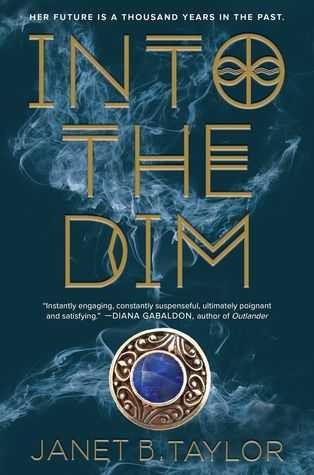
"Into the Dim" by Janet B. Taylor


25897792
Into the Dim is the first book is a YA fantasy series that involves time travel. I have not read many books featuring time travel but I do like the concept. In this book the main character, a sixteen year old girl named Hope, learns that her mother did not die in an earthquake as was believed, but being a member of a family that is able to travel through time, she got trapped in the 12th century England. Hope is determined to do everything possible to rescue her mother and the story takes off from there.

I really enjoyed this book. I picked it up at the right moment when I wanted to read something uncomplicated and engrossing. The book is action and adventure-packed, and really keeps the reader on the edge of the seat. I liked the characters and all the turns and twists in the story line. I also really enjoyed the historical aspects in this book. Overall, a very enjoyable read, and I will definitely be picking up the sequel.

I received an advanced reading copy of this book from NetGalley. The novel officially came out on March 1, 2016.

Friday, February 26, 2016

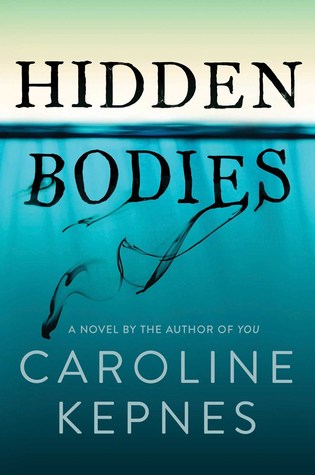
"Hidden Bodies" by Caroline Kepnes


23492288
Hidden Bodies is a highly anticipated sequel to You by Caroline Kepnes, and was just released on February 23rd. I received an advance e-copy of the book from NetGalley and am happy to provide my honest review.

I read the first book right before I dove into the sequel and the difference between the two is quite stunning. In the first book, we basically get to experience the mind of a stalker: it is creepy, cold and at times, nauseating. Kepnes executed it brilliantly and the book deserves all the hype it's been getting.

Hidden Bodies is the next chapter in Joe's Goldberg's life. He just got dumped robbed by a girlfriend and he moves across the country to LA in pursuit of revenge. In this book, Joe is much more human. We learn a bit more about his background: his loveless childhood and struggles with poverty. We also see much more of his humor and literary talent. The first book gave us some nice glimpses of Joe's sarcasm and erudition. In Hidden Bodies, Kepnes definitely turns it up a notch. I really enjoyed Joe's inner monologues and rants about Angelinos, Hollywood and pop culture. He is wickedly funny. Kepnes does a great job of making the reader get attached to her character. At the same time Joe is still a cold-blooded murderer. He has no scruples killing people and makes great excuses to himself as to how he did the world a favor by doing away with them.

So those were the pros of the story. There are definitely a few cons for me. The first big one is that I find the entire idea of Joe's and Love's relationship completely unbelievable. The way they met, the way she falls for him and stays with him felt completely unrealistic to me. But I can roll with the story. I decided to give the author the benefit of a doubt here. But then came the ending.... And I can't help but be a bit disappointed with it. I see why she left it the way she did. The reader by now is really attached to Joe and even though we know he is a killer and needs to be punished, we also can't help but root for him. So in this sense, the author did a great job. However, she also tried to show that he changed. Joe learns humility and once he does, he no longer needs to kill people. One of his nemesis gets killed in a freak accident, and he simply lets the other one go. She also has him quoting the Bible, albeit in a very perverse way (he uses verses about love from First Corinthians to describe his girlfriend). So this development from a killer to humility to scripture is very Dostoyevsky-like. This is the journey of the main character in Crime and Punishment. However, Kepnes does not quite live up to the classic standard of course. Dostoyevky's character truly repents and knows he was wrong in taking someone's life. Kepnes' character is still a cold-blooded killer, unrepentant to the end, who feels he deserves to get away with murders and wants nothing more than to finally be loved and happy.

To be fair, the ending is a bit open-ended and it is unclear whether Joe will get away with his crimes or not. However, what matters to me is that at his core, he is still a selfish, cold psycho no matter how funny or brilliant he is. So I rated this book a bit lower (4 stars) just because I was not quite sure what Kepnes was trying to say with this book. Is anyone beyond redemption? Certainly not. But I do not believe in redemption without repentance and renewal. And Joe, even though he claims to be a new man, is completely unrepentant to the end.

Sunday, February 21, 2016

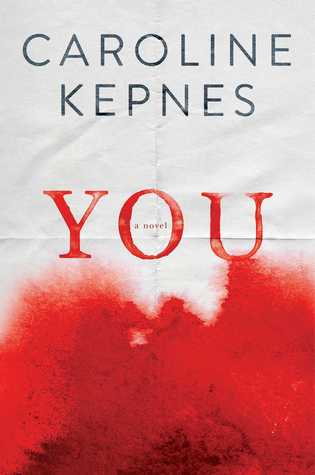
"You" by Caroline Kepnes


20821614
You is a psychological thriller written from the point of view of a stalker. The entire narrative is written in the second person, i.e. the stalker - Joe Goldberg - is writing to his victim/obsession Beck. I think this book is brilliant. I could not help but wonder how somebody could create such a vivid picture of what being inside the mind of a stalker could feel like. Joe is utterly creepy. Certain parts of the book left me completely disgusted. He is a deeply disturbed individual with a lot of issues.

At the same time, Joe is wickedly smart and able to get away with several major criminal acts. He has a very dark and at times sick sense of humor, and I could not help but chuckle going through some of his rants. At some point, when I was probably about 70% done with the book, I did not think I could stay in Joe's mind any longer. It is just too lonely, dark, insecure and disturbing. But I pushed through and finished the book. It is totally worth it.

This book is also eye opening in pointing out how vulnerable many of us are. Our lives are easily accessible online (especially on social media): details about our work place, favorite places to frequent, hobbies, children, etc can be pulled up with a click of a mouse. In the wrong hands, this information can truly be deadly.

Now let's talk about Joe's obsession: a young aspiring writer/MFA student Beck. She is also a study in contradictions. She is flighty, insecure, selfish and constantly craving attention. In other words, even though Joe completely creeped me out, I also could not understand the choices Beck was making. So in a way, it was easier for me as a reader to get attached to Joe, rather than root for Beck.

The only weak point in the plot I thought was in the very end: the way Joe commits a perfect crime and frames Dr. Nicky. For a book that contained nauseating details about Joe's every thought and action, this last point was not well explained and felt a bit of a stretch to me. Even though Joe did live mostly "off the grid", Beck's friends knew about him so I find it utterly unbelievable that he was not called in for questioning of any kind. The book seems to imply that he completely evaded the radar of law enforcement.

Other than this last point that left me puzzled, the book does a great job describing Joe's sick thinking, I do highly recommend this book to anyone who likes thrillers or is interested in a study of a stalker's mind. I rated this book 5 out of 5 stars.