Wednesday, February 8, 2017

"The Story of a New Name" by Elena Ferrante


17465515
This is book 2 in Ferrante's Neapolitan Quartet, in which we continue to follow the story of two friends Elena and Lila. The first book was focused on their childhood. In book 2, Lila and Elena are becoming adults. They are 18. Lila is married and Elena is getting ready to graduate from high school. The novel relates their individual personal stories and also highlights how they intertwine and influence each other.

With Book 1, I had trouble getting into the story and some parts of the book seemed unbearably slow to me. So I decided to listen to the second book in an audio format and really enjoyed it. The reader was wonderful and I found myself really engrossed in the narrative. Not once did I lose concentration or drifted away in my thinking. So if you have trouble with Ferrante's writing, I highly recommend the audio book. I am definitely going to continue listening to the series.

The thing that I particularly liked about the second book is how genuine Ferrante's writing is. She lays bare all of her adolescent insecurities and struggles, and does not shy away from difficult subjects such as domestic abuse and infidelity. She is also very open about the difficulties of her friendship with Lila. On the one hand, they trust each other completely. On the other, their friendship is always tainted by competition and desire to outdo each other.

I gave this installment 5 out of 5 stars and cannot wait to continue with the series.

Wednesday, February 1, 2017

"Arcadia" by Iain Pears


25614934
This was a great read. Arcadia is truly multifaceted. It is a mix of fantasy, Sci-Fi, dystopian, historical fiction and time travel. This blending of genres as well as the complex plot and multiple points of view reminded me of Cloud Atlas, Station Eleven, and The Queen of the Tearling. So if you liked any of those, you will probably enjoy Arcadia as well.

I jumped into the book without knowing anything about the plot and I do believe this is the best way to approach this particular novel. That way various twists are revealed gradually and nothing is spoiled. The narrative switches back and forth between three different worlds/time periods. We start out in 1962 in Oxford where Professor Henry Lytten starts writing a novel about a world, completely different from ours. A few pages after that, the reader realizes that the world he has invented is real.

The world building in this book is intricate, the plot is engaging, and the characters are interesting and complex. The only weak point for me was the romance in the novel. It is by no means a major focus of the plot, however, in great contrast to the rest of the book, the romantic story line was quite juvenile and unconvincing.  I had a hard time believing that two complete strangers from different worlds who barely spent an hour together would start professing their undying love for each other. The entire scene between Rosie (disguised as a boy) and Pamarchon made me cringe. So I ended up docking one star from the overall rating because of the author’s halfhearted attempt at adding romance to the plot.

Overall, an excellent novel, I enjoyed it immensely and will definitely be reading more of Iain Pears’ work. 4 out of 5 stars.

Wednesday, January 25, 2017

Top 5 Wednesday: Favorite Underrated Books


I have not done a top 5 Wednesday post in a while, but the subject for this week is very interesting and I could not resist. I think a lot of book-bloggers/reviewers tend to read and talk about the same books, and this is a great way for all of us to learn about less known gems that are out there. I, for one, definitely tend to jump on the popular bandwagon and read a lot of highly publicized new or recent releases and as a result sometimes struggle to recommend a book that might be unknown to an avid reader like myself.

The list below features a couple of recent releases, two on-going series that I love and a modern classic.

1. Pushkin Hills by Sergei Dovlatov

1052017

I just read this book earlier this month and fell in love with Sergei Dolvatov's writing. Dovlatov immigrated to the United States from the Soviet Union in 1979. He work was never recognized in the Soviet Russia, but gained a lot of popularity after the break-up of the USSR. In America, his work was published in The New Yorker and was highly acclaimed by his contemporaries such as Kurt Vonnegut. Pushkin Hills was translated by his daughter and supposedly captures the author's unique style and sense of humor. In many aspects it is autobiographical in nature, but it is also a great snapshot of the Soviet Russia.

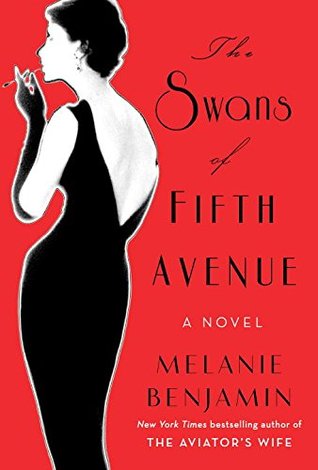
2. The Swans of Fifth Avenue by Melanie Benjamin

25279165

This is a fairly recent release. The book came out in January 2016, and focuses on the unlikely friendship between the flamboyant and strikingly talented Truman Capote and the glamorous socialite and trend-setter Babe Paley. This book is the reason I originally became interested and subsequently completely enamored with Capote's writing.

3. The Other Einstein by Marie Benedict

28389305

This is another recent release (October 2016). The book tells the story of Albert Einstein's first wife Mileva Maric. With the upcoming release of the film Hidden Figures, a look at women in science throughout history is certainly a poignant subject. Mileva was the first woman who was admitted to the Polytechnic University in Switzerland to study physics. She was brilliant and quite possibly contributed (without ever getting any credit for it) to Einstein's greatest work. This book was very educational and I highly recommend it.

4.  Five Kingdoms by Brandon Mull

18049017

This is a very entertaining, imaginative and fast-paced middle grade fantasy series. 4 books are currently out and the last one is coming out later this year. It is about a group of kids who inadvertently while trick or treating on Halloween enter a different world and go on a series of wild adventures. Our entire family has enjoyed following this series and we cannot wait to read the conclusion.

5. Cainsville by Kelley Armstrong

16101040

Cainsville is a paranormal mystery series set in modern-day Chicago, but fairies and other fantastical creatures disguised as humans are very much part of this world. Each book is centered around a murder mystery which the main protagonist has to help solve. I have enjoyed all the books in the series (4 are currently out and 4 more are planned by the author), and I highly recommend them to those who like mysteries with a fantastical twist.


"Three Wishes" by Liane Moriarty


22513073
This book was super fun. I listened to it on audiobook and highly recommend this format. The narrator was excellent. This is a contemporary family drama, and in it, we follow the three Kettle sisters: Lyn, Cat and Gemma. They are triplets in their early 30s and we follow them as each of them navigates the difficulties of marriage/relationship, parenting and career. It was fascinating to read about three very distinct personalities who have been together since before birth and are so used to sharing everything and being in each other's business all the time. I loved Moriarty's writing and her sense of humor. This was the first novel that I read by her, and I will definitely plan on checking out more of her work.

Friday, January 20, 2017

"Deathless" by Catherynne M. Valente


8694389
I would like to preface this review with a quote from Valente’s novel, which perfectly describes my feelings about this book:

“In both marriage and war you must cut up the things people say like a cake, and eat only what you can stomach” (Deathless).

There are aspects of this book that I really enjoyed and then there are things that I just could not stomach.

Regardless of how one feels about the overall plot, one thing is undisputable: Valente is very familiar with the Russian folklore. She makes lots of references to various folk stories and legends, weaves in descriptions of magical creatures (e.g., the firebird) as well as specific spirits, goblins and other demons prevalent in the Russian mythology and folklore. However, because she comes through as extremely knowledgeable about the Russian culture, the few mistakes that she does make, stick out as a sore thumb. I noticed four: (1) volchitza is a she-wolf, not a little wolf; (2) volchik is not a word, you would say volchonok or volchok to address a male wolf cub; (3) Alexey is not a form of Alexander, it is a completely different name; and (4) Marousha is not a valid diminutive for Marya.

I was also a bit thrown by her references to Pushkin. Yes, he is the most famous of the Russian poets. He also did write several fairy tales. However, there is no direct connection to his fairy tales in Deathless. Valente quotes one stanza from his introduction to the poem Ruslan and Ludmila in which Pushkin references Koschei, but that stanza has nothing to do with the fairy tales he actually authored, and is rather meant to generally introduce the magical world of the Russian folklore as the setting of his poem. In addition, she attributes Viy to Pushkin, and Viy is a story by Nikolai Gogol. So the literary references made no sense to me.

With that out of the way, let’s talk about the plot. Basically, Valente took the most famous Russian fairy tales featuring Koschei the Deathless and Baba Yaga and retold them in the setting of the Soviet Russia right before and during World War II. I was really fascinated by what she did and enjoyed the book for about 150 pages or so. After that, I kept wondering where she was going with the story line. For one, she tells us that the entire magical world is engaged in an endless war: the Tsar of Death (Viy) keeps battling the Tsar of Life (Koschei the Deathless). For someone who grew up on Russian folktales such division of power makes no sense. Both Viy and Koschei are forces of evil and in folklore both equally sow death and destruction. In fact, the entire magical world appears to consist only of demons and evil creatures: some of them are alive and are thus in Koschei’s army, but as soon as they die, they join Viy’s ranks. What’s unclear to me is how humanity fits into this and where are the forces of good. Russian folktales always have the main human characters, say Ivan and Vasilisa, who have to battle or overcome some evil force (such as Koschei), but they usually get magical help from “good” powers. It could be a mother’s blessing that protects them or they might get some advice from an old man or a woman who have magical powers. The battle in the story is always between good and evil. Valente’s scenario was confusing and the “good” component was completely missing.

Surprisingly, I did like the ending of the novel. It made sense to me that Viy (or the Tsar of Death) has taken over Russia – sort of a symbolism for godless and tyrannical Soviet regime. At the same time, the magical creatures that are showing the budding signs of dissention are Baba Yaga and Koschei, who are again by their nature evil, so I am not sure what hope they can give to humanity. In addition, because Valente chose the setting of WWII, is she saying that Soviet victory over Germany equates the victory of death over life? This sort of reasoning is pretty scary and I don’t even want to go there.

So the bottom line is, even though some symbolism made sense to me, overall the plot is quite confusing and does not seem to have any overarching message. I ended up not giving this book any rating. I did not think it was terrible, and I also definitely did not think it was great. I just don’t think I understand what the author was trying to say. I have read some reviews of this novel and tend to agree with the negative ones. Overall, I do not recommend this book. It was disappointing.

Saturday, January 14, 2017

A series review: "Fitzwilliam Darcy, Gentleman" by Pamela Aidan

110095  110097  108759
Pamela Aidan's trilogy Fitzwilliam Darcy, Gentleman is a re-telling of Jane Austen's Pride and Prejudice from Mr. Darcy's perspective. Unlike many other books written about Elizabeth Bennett and Mr. Darcy, Aidan's books are not romance novels. The books are written in the style and language of the period. They are extremely close to Austen's original, and the BBC mini-series based on it. The surprising thing about these books was the fact that it was difficult for me to get into them. With each of the three books in the series, it would take me 100-150 pages to really get into the story. I also found that the portions of the books that were direct re-tellings were the most boring, and lacked Austen's magic. Elizabeth Bennet, especially in the first book, was quite unlikable. Her change of heart towards Darcy was also hard to understand in Aidan's books even though Austen made it work in hers.

At the same time, I found myself enjoying the material and plot twists that Aidan creatively added to the overall story line. Unlike some other readers, I thought the second book (which had nothing to do with Elizabeth Bennett and Austen's original plot) was the strongest in the series. I also liked the two characters that Aidan created: Darcy's valet Fletcher and his friend Dy - both were not part of Austen's original work. Finally, Aidan added the historical context to the novels masterfully weaving in references to political events of the day and mentioning major historical figures living at the time. Overall, my ratings for the books were:
Book 1: An Assembly Such as This - 4 stars
Book 2: Duty and Desire - 5 stars, and
Book 3: These Three Remain - 3 stars

If you cannot get enough of Pride and Prejudice, this trilogy could be a good way to get back into the world and see it from a new perspective.

Wednesday, January 11, 2017

"Pushkin Hills" by Sergei Dovlatov


1052017
Pushkin Hills ("Заповедник") was written by Sergei Dovlatov, a Russian and American writer, in the late seventies-early eighties of the 20th century. The novel is largely autobiographical. Just like the main character, Dovlatov struggled with alcoholism and was never published in the Soviet Union during his lifetime. Pushkin Hills shows the realities of life in the Soviet Russia, and the struggles a talented writer has to deal with if he wants to write creatively rather than follow "the Party line". The main character Boris spends a summer working as a tour guide in the manor of Russia's greatest poet Alexander Pushkin. Even though Boris' personal situation is deeply tragic, he describes the rural life around him with humor and affection. The KGB officer in this novel is paradoxically sane in his views and advice whereas Boris' fellow tour guides and writers are untalented, vulgar and pitiful in their mediocrity.  At the same time, the protagonist's (i.e., the author's) voice is never arrogant. He knows his own flaws and demons and does not claim to be something he is not. He cannot be a successful writer in his home country, and he is hesitant to flee to the west. He is sorry to see his wife and daughter emigrate, but he also knows that he cannot offer them a good life in Russia. Even though Dovlatov tackles difficult issues, he does so with humor. This book is a delight to read. I found myself highlighting quote after quote. He laughs at popular art, desperation of single women, incoherent speech of his alcoholic landlord, and himself, always at himself. A great read. I highly recommend it. 5 out of 5 stars.